Introduction: From AI Experiments to AI Execution
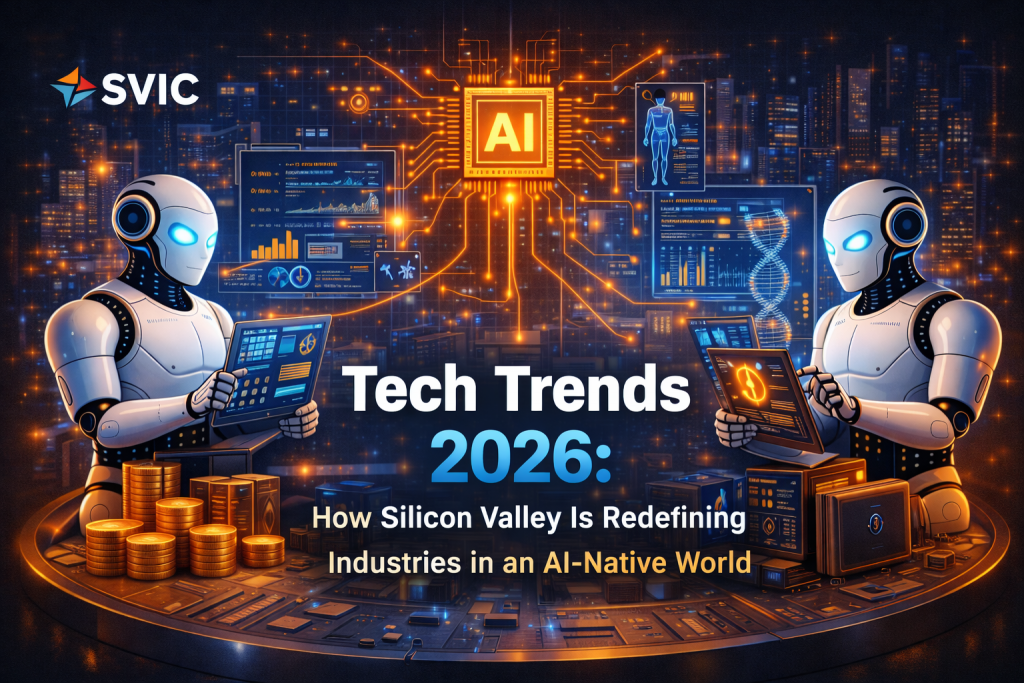
As we move toward 2026, Artificial Intelligence is no longer emerging—it is structural.
What once lived in innovation labs and pilot programs is now being embedded into products, operations, infrastructure, and decision-making at scale. The real shift underway is not about adopting AI tools, but about rebuilding organizations, industries, and leadership models around intelligence itself.
In Silicon Valley, this transformation is already visible:
- AI is moving from software into the physical world
- Autonomous agents are reshaping the workforce
- Compute and energy constraints are redefining AI economics
- Organizations are transitioning from AI-enabled to AI-native
- Cybersecurity is becoming an AI-versus-AI battlefield
At Silicon Valley Innovation Center (SVIC), our immersion programs are designed around these real-world shifts—giving global leaders firsthand exposure to how the future is actually being built.
This article explores the six most critical tech trends shaping 2026, grounded in Silicon Valley realities and expanded through industry-specific lenses.
1/6 – From Software to Systems: AI Enters the Physical World
AI is no longer confined to screens, copilots, or dashboards. It is becoming embodied—embedded into machines, infrastructure, and environments.
What’s happening in Silicon Valley
- Tesla and Figure AI are advancing humanoid and task-specific robots for manufacturing and logistics.
- NVIDIA is positioning robotics, simulation, and digital twins as the next major AI platform through Isaac and Omniverse.
- Google DeepMind is combining vision, language, and control models to enable robots that can reason and adapt in real-world settings.
Why this matters
Physical AI dramatically expands economic impact—but also risk:
- Productivity gains across manufacturing, healthcare, logistics, and energy
- New safety, regulatory, and ethical challenges
- Increased importance of human-machine collaboration
AI-driven robotics and physical systems are projected to impact over $15 trillion in global economic value by 2030.

SVIC Immersion Lens
During SVIC immersions, leaders explore:
- How Silicon Valley companies move from robotics pilots to scalable deployment
- How physical AI systems are governed and tested for safety
- How humans are intentionally designed into AI-driven workflows
- Why trust and reliability matter more than raw autonomy
Leadership takeaway:
The future is not fully autonomous machines—it is intelligent systems designed for human oversight.
2/6 – The Rise of Agentic AI: Designing a Silicon-Based Workforce
AI systems are evolving from reactive tools into agentic systems capable of planning, executing tasks, and coordinating with other agents.
What’s happening in Silicon Valley
- OpenAI, Anthropic, and Meta are building models optimized for multi-step reasoning and agent workflows.
- Startups like Adept, Cognition, and CrewAI focus on AI agents that operate across software environments.
- Enterprises are deploying internal AI agents across engineering, finance, HR, and operations.
Why this matters
Organizations are entering a new workforce era:
- AI agents behave less like tools and more like digital employees
- Humans shift toward judgment, creativity, and oversight
- Governance, accountability, and decision boundaries must be redefined
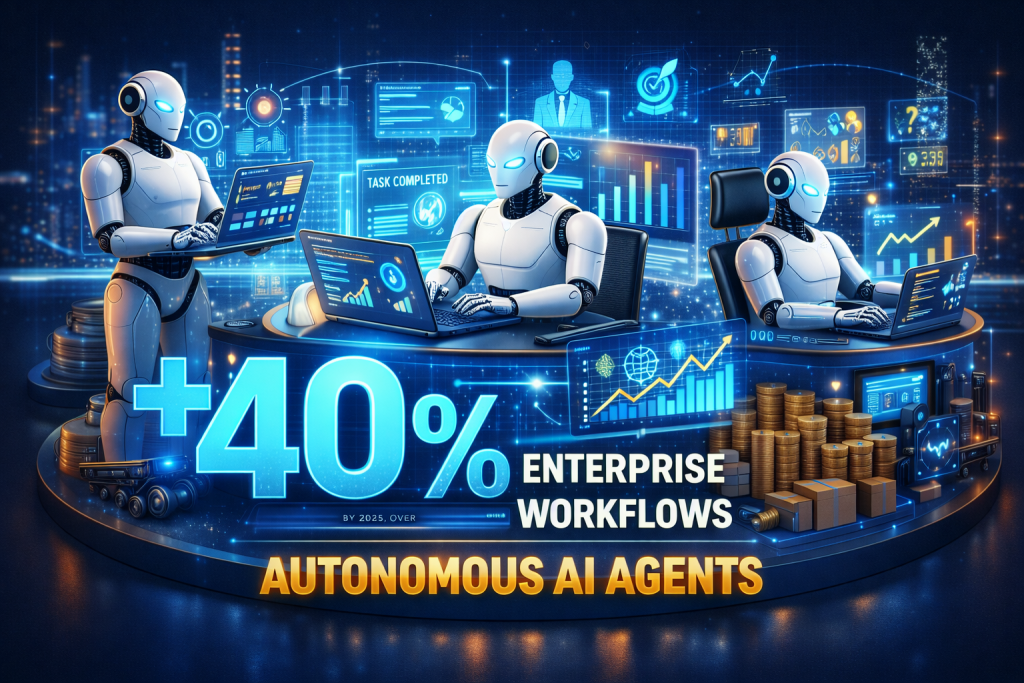
By 2026, over 40% of enterprise workflows are expected to involve autonomous AI agents.
SVIC Immersion Lens
SVIC immersions help leaders understand:
- Which decisions can be delegated—and which cannot
- How AI agents are monitored, audited, and governed
- How leadership roles change when execution is partially automated
- Why culture and trust determine adoption success
Leadership takeaway:
Agentic AI is not an IT decision—it is a management and governance transformation.
3/6 – The AI Infrastructure Reckoning: From Training to Inference Economics
While early AI investment focused on training large models, the dominant cost driver by 2026 will be inference—running AI continuously in production.
What’s happening in Silicon Valley
- NVIDIA, AMD, and custom silicon startups racing to optimize inference performance.
- Apple and Meta pushing inference to the edge to reduce latency and cloud dependence.
- Cloud providers redesigning pricing models around AI workloads.
Why this matters
AI compute becomes a strategic constraint:
- Cost, performance, and energy efficiency must be balanced
- Centralized vs. edge deployment decisions matter
- Sustainability becomes a core AI design consideration
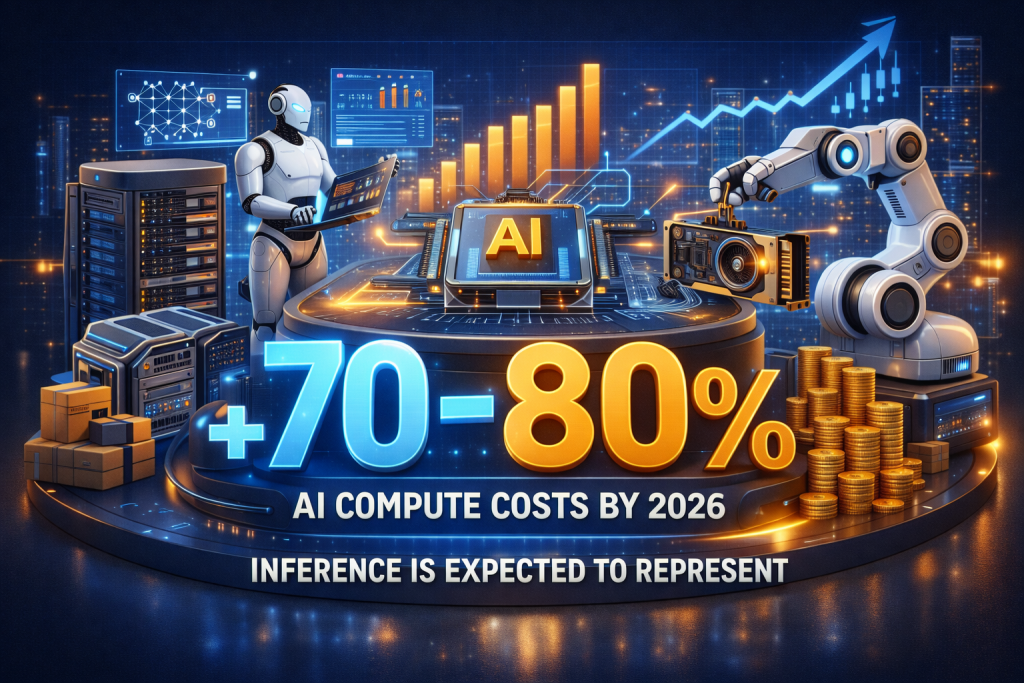
Inference is expected to represent 70–80% of total AI compute costs by 2026.
SVIC Immersion Lens
SVIC immersions expose leaders to:
- How top tech companies architect scalable AI infrastructure
- How build-vs-buy decisions are made for AI compute
- How energy constraints influence AI strategy
- Why infrastructure choices determine long-term competitiveness
Leadership takeaway:
AI infrastructure is no longer a backend decision—it is a strategic leadership priority.
4/6 – The AI-Native Organization: Rebuilding from First Principles
Leading companies are no longer “adding AI.” They are rebuilding their organizations around it.
What’s happening in Silicon Valley
- Amazon and Google embedding AI into every operational layer.
- Product teams designing AI-first user experiences.
- Faster experimentation replacing rigid planning cycles.
Why this matters
AI-native organizations rethink:
- Org structure and decision authority
- Talent models and reskilling
- Speed, governance, and accountability
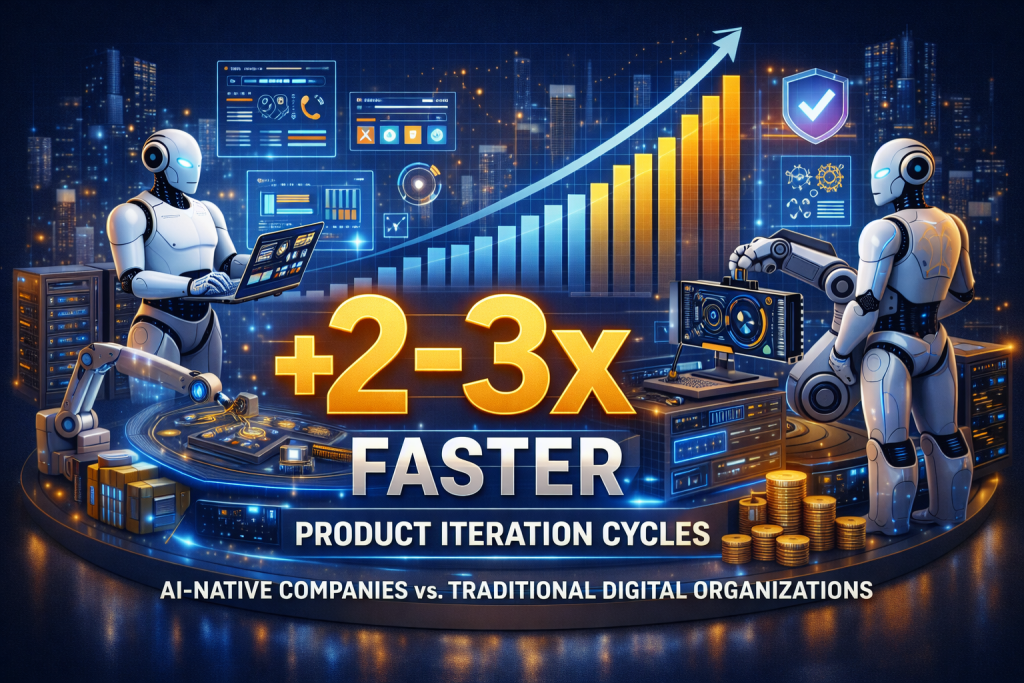
AI-native companies achieve 2–3x faster product iteration cycles than traditional digital organizations.
SVIC Immersion Lens
SVIC immersions focus on:
- How leadership teams redesign workflows for AI
- How culture adapts to continuous learning
- Why AI transformations fail when treated as technology projects
- How governance enables speed without chaos
Leadership takeaway:
AI transformation is ultimately a leadership and culture redesign, not a software rollout.
5/6 – AI and Cybersecurity: Intelligence on Both Sides
AI has transformed cybersecurity into an AI-versus-AI domain.
What’s happening in Silicon Valley
- Attackers using AI for phishing, malware generation, and vulnerability discovery.
- Defenders using AI for real-time detection, prediction, and response.
- AI systems themselves becoming high-value targets.
Why this matters
- New risks: data poisoning, model theft, prompt injection
- Security shifts from prevention to continuous intelligence
- Trust and resilience become competitive advantages
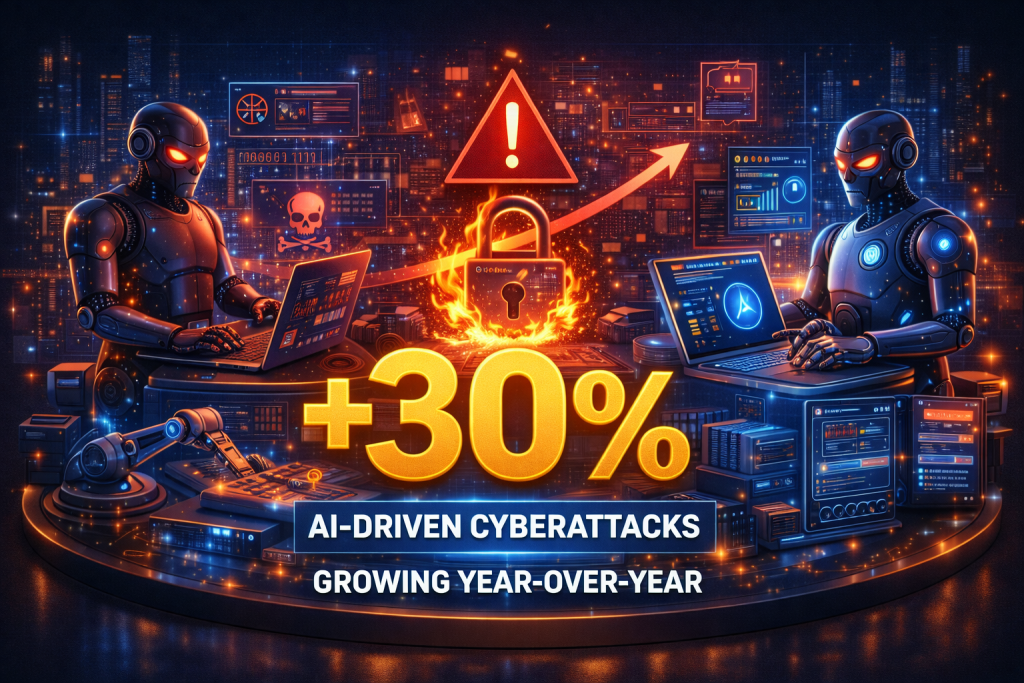
AI-driven cyberattacks are growing at over 30% year-over-year.
SVIC Immersion Lens
SVIC immersions help leaders:
- Understand AI risk at the board level
- Design security into AI systems from the start
- Balance speed with resilience
- Prepare for regulatory and reputational risk
Leadership takeaway:
In an AI-native world, security is never finished—it is continuously learned.
6/6 – Cutting Through the Noise: Signals That Actually Matter
As AI dominates headlines, not all trends deserve attention.
Signals worth tracking
- Responsible AI regulation shaping global markets
- Energy-efficient AI architectures
- Human-AI collaboration models
- Interoperability standards for AI agents
- Workforce reskilling at scale
Signals to ignore
- Tool-of-the-week hype
- Overstated AGI timelines
- “AI replaces everyone” narratives
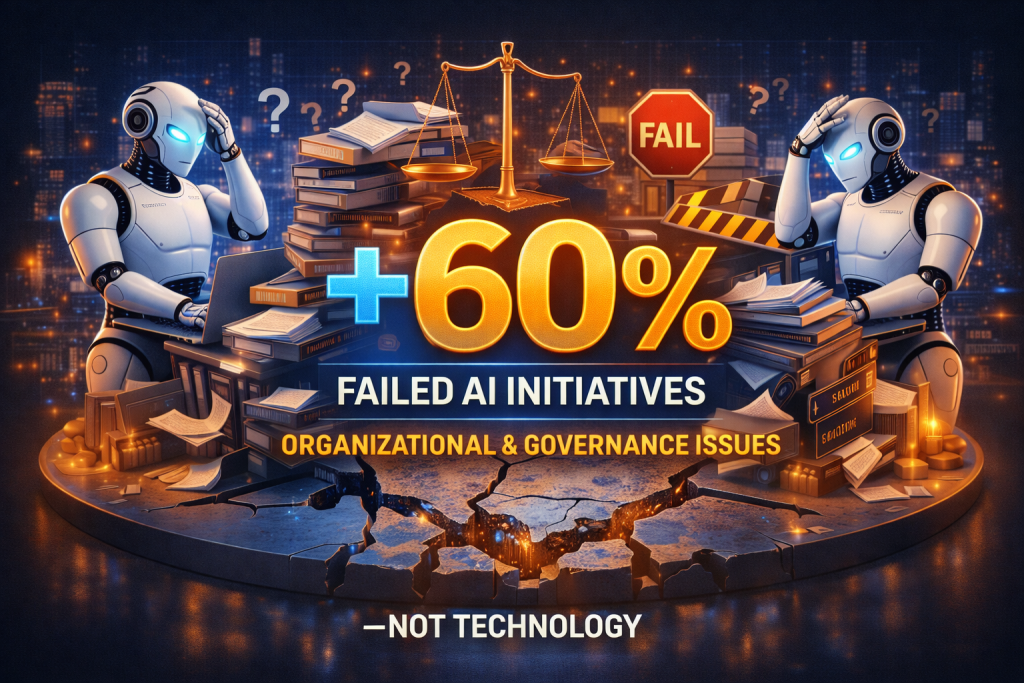
Over 60% of failed AI initiatives fail due to organizational and governance issues—not technology.
SVIC Immersion Lens
SVIC immersions are designed to:
- Separate signal from noise
- Expose leaders to what is actually working
- Translate Silicon Valley insight into action
Industry-Specific AI Transformation: What Leaders Are Learning in Silicon Valley
Healthcare: From Reactive Care to Predictive Medicine
AI is transforming healthcare from treatment to prevention and precision.
Silicon Valley signals:
- AI-driven diagnostics and imaging
- Accelerated drug discovery
- Clinical decision support systems
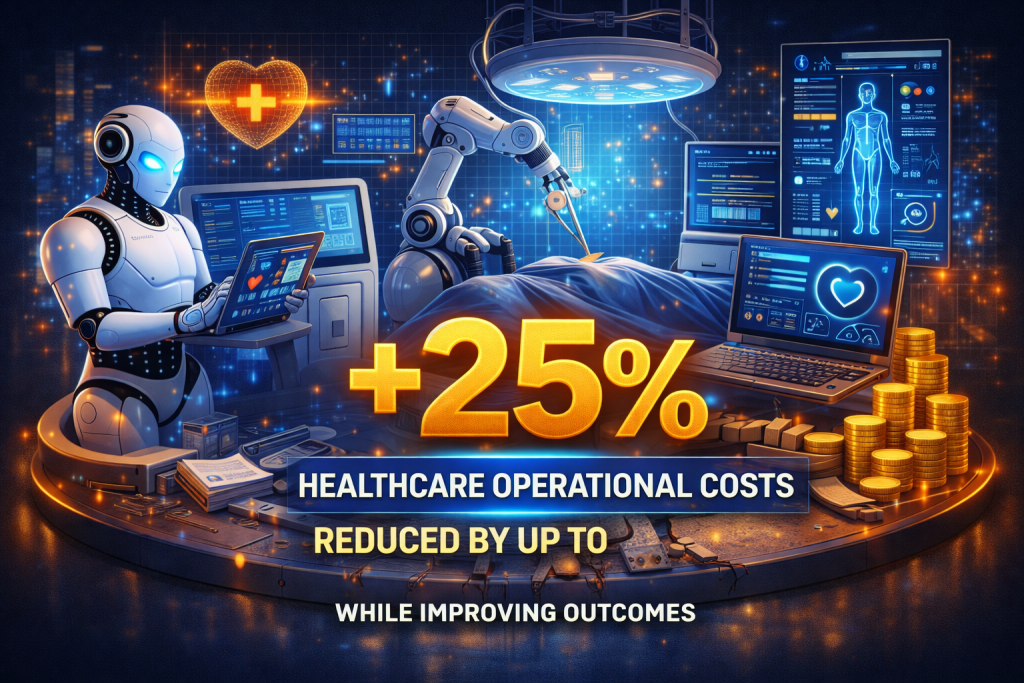
AI could reduce healthcare operational costs by up to 25% while improving outcomes.
SVIC Immersion Lens – Healthcare
Leaders explore:
- How AI integrates into clinical workflows
- How trust, ethics, and explainability are maintained
- How regulation and innovation coexist
- Why clinician adoption determines success
Energy: Intelligent, Resilient, and Decentralized Systems
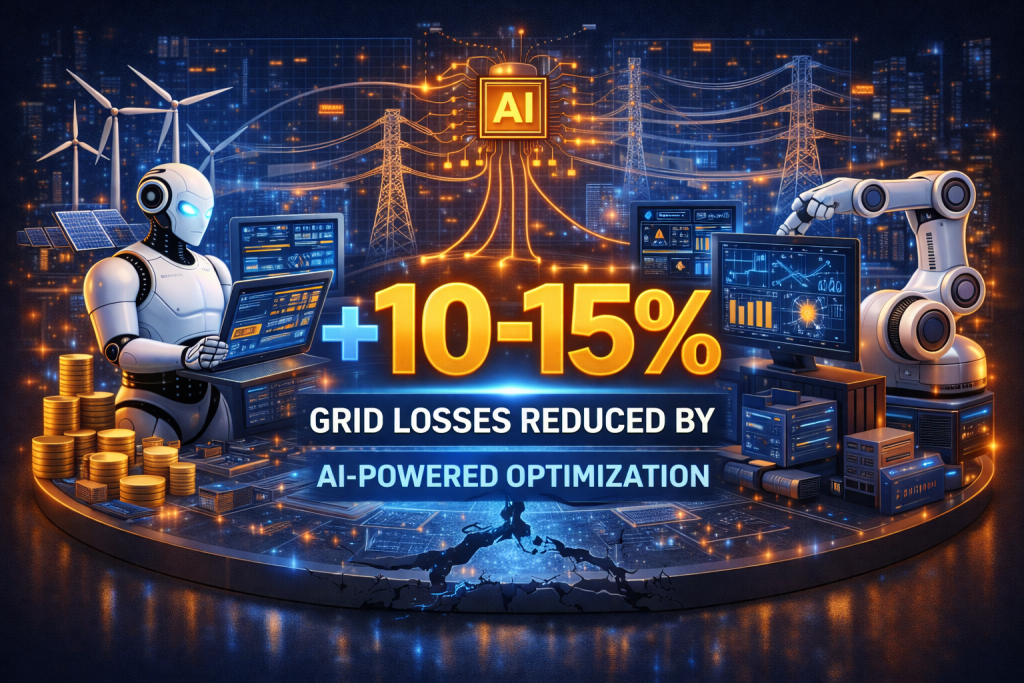
AI enables smarter grids, predictive maintenance, and demand optimization.
AI-powered optimization can reduce grid losses by 10–15%.
SVIC Immersion Lens – Energy
Leaders learn:
- How AI supports grid modernization
- How digital twins simulate energy systems
- How AI strengthens resilience and security
- Why data is now as critical as infrastructure
Finance: From Automation to Autonomous Intelligence
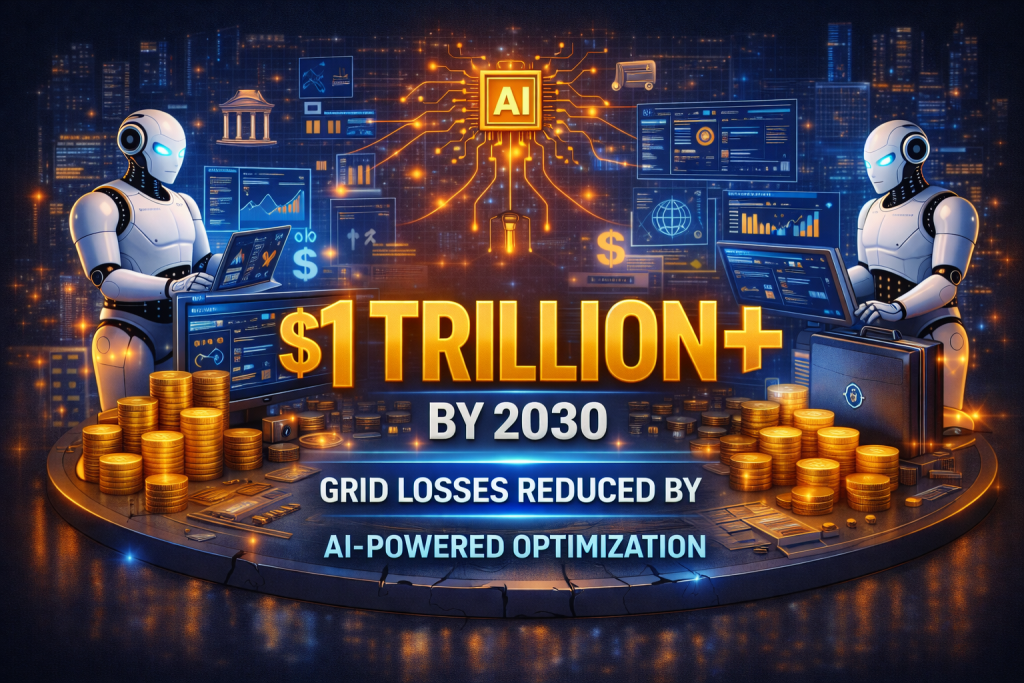
AI is reshaping risk, compliance, fraud detection, and personalization.
AI is projected to generate $1 trillion+ in value for global finance by 2030.
SVIC Immersion Lens – Finance
Leaders explore:
- AI governance in regulated environments
- Trust and explainability as differentiators
- How AI agents reshape back-office operations
- Why regulatory readiness defines winners
Manufacturing: Autonomous, Adaptive Operations
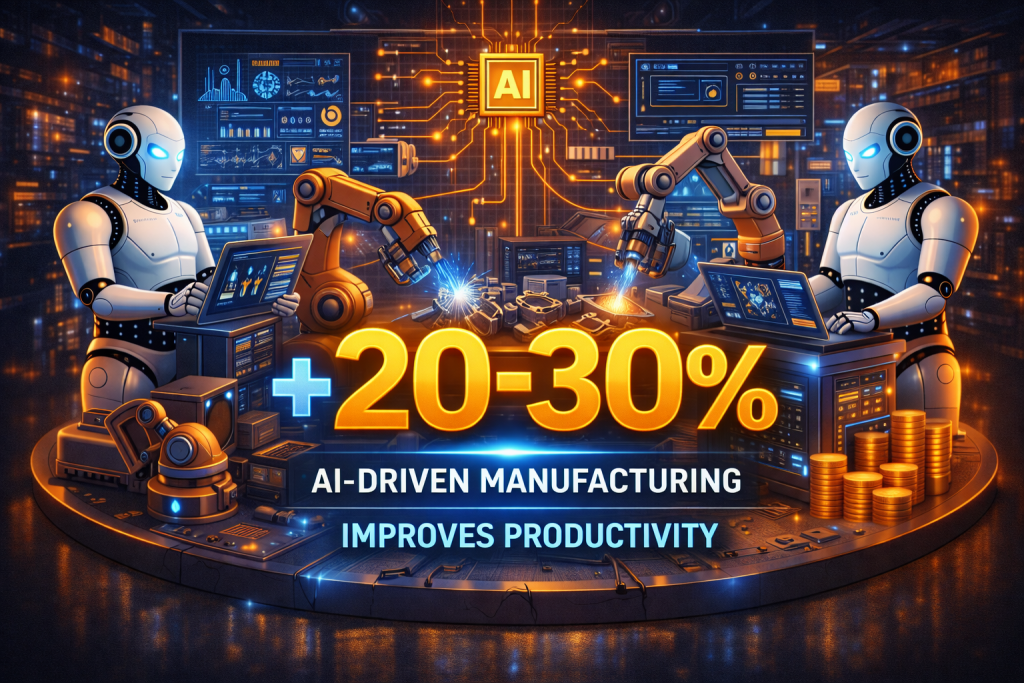
AI and robotics are creating self-optimizing factories.
AI-driven manufacturing can improve productivity by 20–30%.
SVIC Immersion Lens – Manufacturing
Leaders experience:
- Physical AI and robotics at scale
- Human-machine collaboration models
- Workforce reskilling strategies
- Real-time decision-driven factories
Conclusion: Why Immersion Matters in an AI-Native Era
By 2026, AI will not be optional—but clarity, leadership, and execution will separate winners from laggards.
Organizations that succeed will:
- Design AI responsibly
- Rebuild operating models, not just tools
- Invest in people, infrastructure, and governance together
At Silicon Valley Innovation Center, our immersion programs exist for this exact moment—to help leaders see the future as it is being built, not as it is theorized.
The future is already here.
The question is whether your organization is learning fast enough to lead it.